


From Votes to Roadmap: What the NautoCon Munich Product Feedback Session Means for Nautobot
We recently wrapped up our second NautoCon in Munich, and it was great to meet and talk with so many of you in person (less great: the food poisoning I picked up on the flight over). The best product roadmaps don’t get written in conference rooms, though — they get written in conversations with the people who run networks every day, and that’s exactly what Munich gave us. We sat down with the Nautobot community, customers, operators, and contributors, and asked a pretty direct question: of everything we could build next, what matters most to you?
And we didn’t just go on impressions. We ran a structured ranking exercise across nine capability areas, asking attendees to vote for their top three priorities, with first-place votes carrying three points, second-place two, and third-place one, which gave us both a weighted score and a raw vote count for every capability. It’s honestly one of the clearest signals we’ve ever collected on where the community wants Nautobot to go. Here’s my summary of what you told us, and how we’re using it to influence product direction.
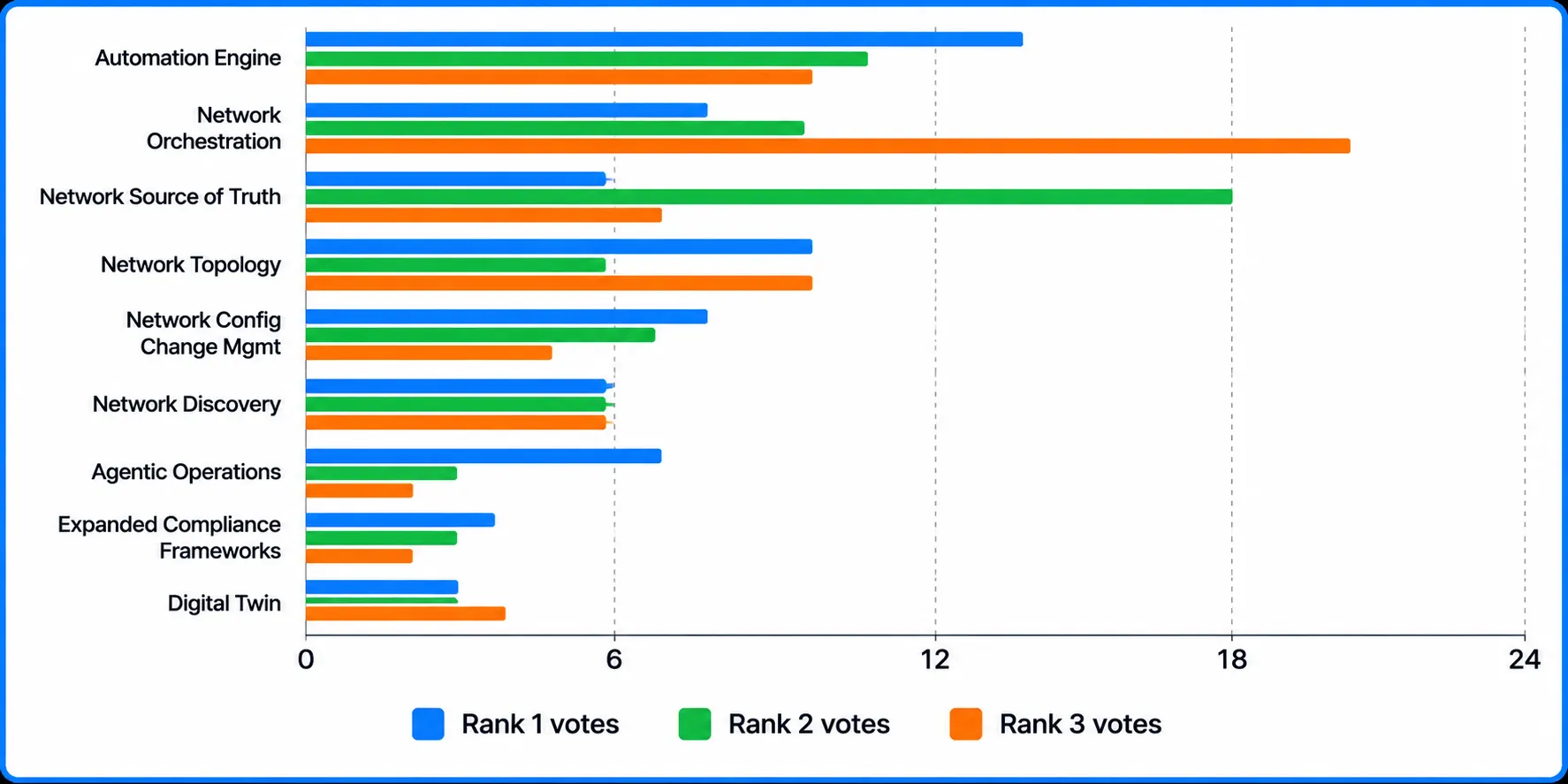
Figure 1: Community priority votes at NautoCon Munich, by rank, across nine Nautobot capability areas.
1. Automation Engine: The Community’s Clear #1
By far the capability with the most first-place votes was the Automation Engine — 15 of them, plus a weighted score of 77 that put it well ahead of the field. That’s about as clear a signal as we could ask for, and it’s a topic near and dear to us at Nautobot. Afterall, it’s in the name! We’re going to keep expanding and building on what’s already a pretty extensive set of capabilities.
In Nautobot 3.1, we introduced OS Upgrades and Operational Compliance, which let users upgrade network operating systems and automate execution of operational (show) commands on their devices. Both of these apps are getting additional functionality in the soon-to-be-released Nautobot 3.2: OS Upgrades adds support for clustered IOS-XR and Junos devices, and supports a pre-check of the OS version, which simplifies and improves the user experience. Operational Compliance adds the ability to run checks against offline devices, improved snapshot comparison, and extended Validation Rules.
We also introduced Insights in 3.1, which gives users graphical, up-to-the-minute information on the status of their network automation. In 3.2, Nautobot gains advanced Reporting so users can design and distribute custom reports on their automation activity and network, and we’ll continue to enhance extracting and visualizing automation data in a release later this year. At the same time, we’ll keep building out the automation applications with more features to extend functionality and improve the user experience. The message from Munich was clear, and so is our answer to it.
2. Network Orchestration: Broad, Persistent Demand
Network Orchestration finished second with a weighted score of 65 — and notably, it collected the most third-place votes of any capability (21). That’s worth pausing on, I think: even when orchestration isn’t a team’s top priority, it’s on nearly everyone’s list, and that breadth of demand tells us something.
It’s also an area we’ve already been investing in. In Nautobot 3.0, we added advanced Red Hat AWX / Ansible Automation Platform integration to the Ansible Automation application, which lets users connect with their external Ansible solution and view and execute it from within Nautobot, so they can seamlessly integrate their preferred orchestration solution directly with Nautobot. In 3.2, we’re adding in the ability for users to chain Nautobot Jobs together as part of our Job Chaining solution, which will let developers stitch together multiple Jobs in sequence and pass data between completed Jobs.
Looking further out, we’re actively analyzing the orchestration options in play right now. As we go through the design and implementation phases with those, we’ll certainly connect with users to make sure their voice is heard — Munich was a good reminder of how much better the outcome is when we do.
3. Network Source of Truth: The Foundation Everyone Builds On
Third by weighted score (61), but first in second-place votes (18), Network Source of Truth remains the foundation of everything Nautobot does, and the community made clear they want that foundation to keep expanding.
We’re continuing to deliver on that. Nautobot 3.2 extends the data model with Breakout Cables, which evolves the cable model to a true multipoint-to-multipoint connection, and IP Ranges, which simplifies modeling of contiguous IPs. Beyond 3.2, we’re looking at our Single Source of Truth application to improve performance and to provide more actionable feedback to users on the progress of the ETL (Extract / Transform / Load) solution, so you always know exactly where your data sync stands.
This is also the area where community input has the most direct line into the roadmap, and we’d genuinely appreciate feedback from users on how to extend and improve Nautobot here. If there’s a model you need or a workflow we should improve, tell us — in Slack, on GitHub, or at the next event. This blog is a good illustration of what happens when you do.
4. Network Topology: Seeing the Network, Not Just Modeling It
Network Topology posted double-digit first-place votes (10) and a weighted score of 52 — a strong statement that users don’t just want their network modeled; they want to see it, and I think they’re right.
We’re looking at extending the existing functionality so users can quickly and easily view logical network relationships graphically — both within Nautobot itself and exported out, to help with network design and expansion. Ensuring an accurate and correct view of the network plan is always crucial, and we feel this is an area that will be of real value to users. It’s something we’re actively researching, and I look forward to talking about it in more detail in a future blog post.
5. Network Discovery: From First Release to Fast Follow
Network Discovery drew consistent interest across all three vote ranks, and it’s an area where we moved from idea to shipping product fast. Nautobot 3.1 delivered the first release of the Device Discovery application, which scans the network quickly and accurately so users can spot discrepancies against the source of truth and fix them. It works hand-in-hand with our existing Device Onboarding — which already gathers detailed configuration and inventory data from network elements — and acts as a springboard into it.
Here’s the part that matters for this blog: the enhancements coming in 3.2 come directly from user feedback on that first release. You told us what needed work, and we’ve incorporated it into the solution — and we’ll continue to enhance it in future releases.
The Full Field: Every Vote Counted
So what about everything else on the list? The top five weren’t the whole story. Network Config Change Management actually out-scored Network Discovery on weighted points (43 vs. 36), and there was also interest from attendees in Agentic Operations, Expanded Compliance Frameworks, and Digital Twin, all of which drew first-place votes. There’s no shortage of great ideas and opportunities in these areas, and several are further along in our thinking than you might expect.
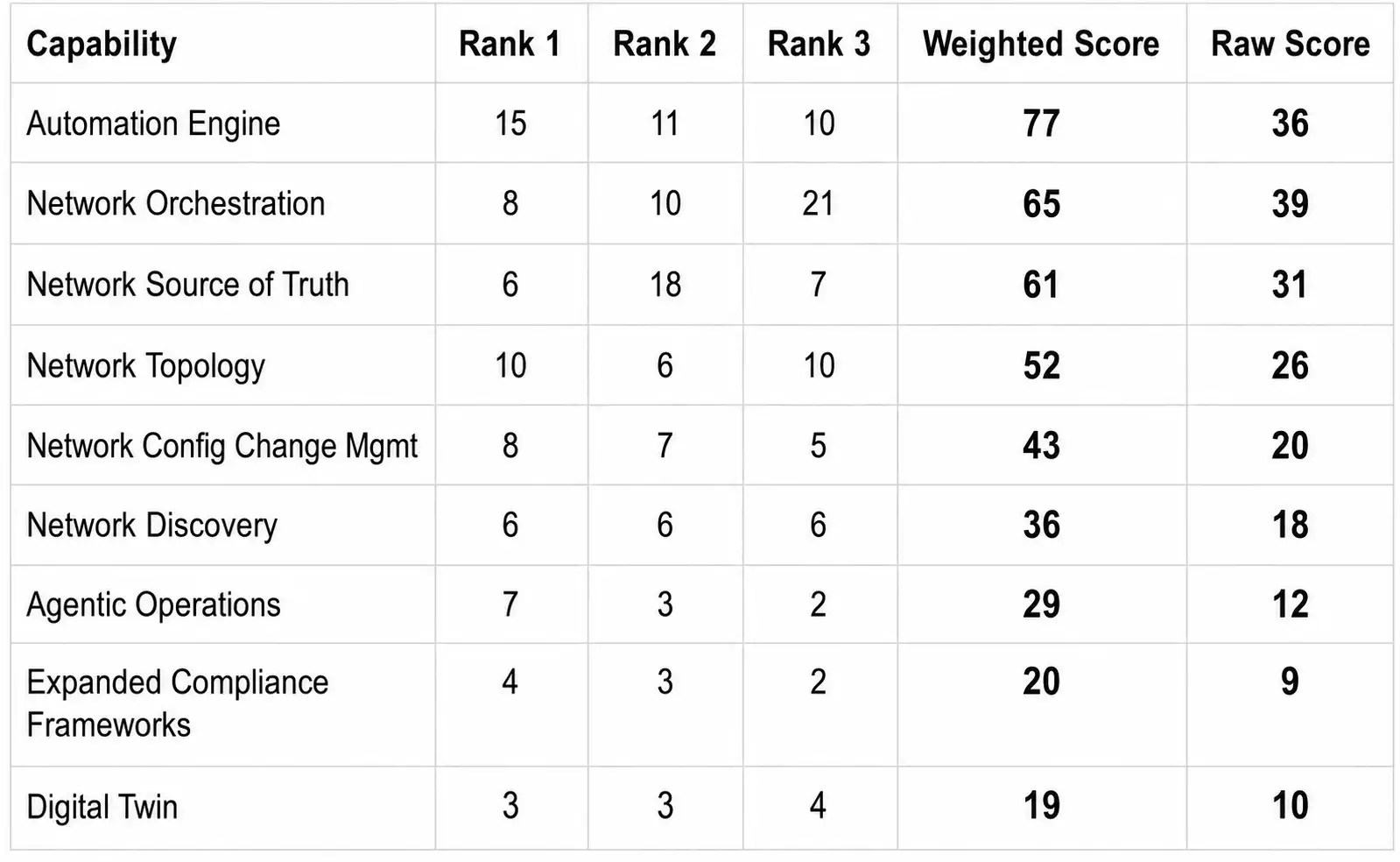
Figure 2: Complete NautoCon Munich voting results — first/second/third-place votes, weighted score (3/2/1 points), and raw vote count.
What Happens Next: We’ll Show You the Roadmap
Community feedback only matters if it actually changes what gets built, so here’s my commitment: every capability on this list is being triaged against our product roadmap right now, not filed away for someday.
In part two of this series, I’ll close the loop. I’ll walk through which feedback items from Munich have landed on the committed Nautobot roadmap, which ones are still in active design and evaluation, and where we could use more community input to make the right call — including a closer look at Network Config Change Management, Agentic Operations, Expanded Compliance Frameworks, and Digital Twin. You showed up and voted, so you should get to see where those votes went; that’s how we build Nautobot, in the open and with you.
Until then, explore everything new in Nautobot, join the conversation in the Network to Code Slack, or book a demo if you’d like to see any of this live. And to everyone who packed the room in Munich and made their priorities heard: the exercise was genuinely wonderful for us, and I can’t wait to show you what comes of it. Thanks again!
FAQ: NautoCon Munich Community Feedback
The Automation Engine was the clear top priority, earning 15 first-place votes and a weighted score of 77 — the highest of nine capability areas ranked by attendees.
Attendees ranked their top three priorities across nine Nautobot capability areas. First-place votes counted 3 points, second-place 2 points, and third-place 1 point, producing a weighted score alongside the raw vote count.
Feedback is being triaged directly against the Nautobot product roadmap. Nautobot 3.2 already reflects it — including OS Upgrades and Operational Compliance enhancements, Job Chaining, Breakout Cables, and IP Ranges — and a follow-up blog will detail which items are committed to the roadmap versus in active evaluation.
Does this all sound amazing? Want to know more about how Network to Code can help you do this, reach out to our sales team. If you want to help make this a reality for our clients, check out our careers page.


